Whalefall

Director: Brian Duffield

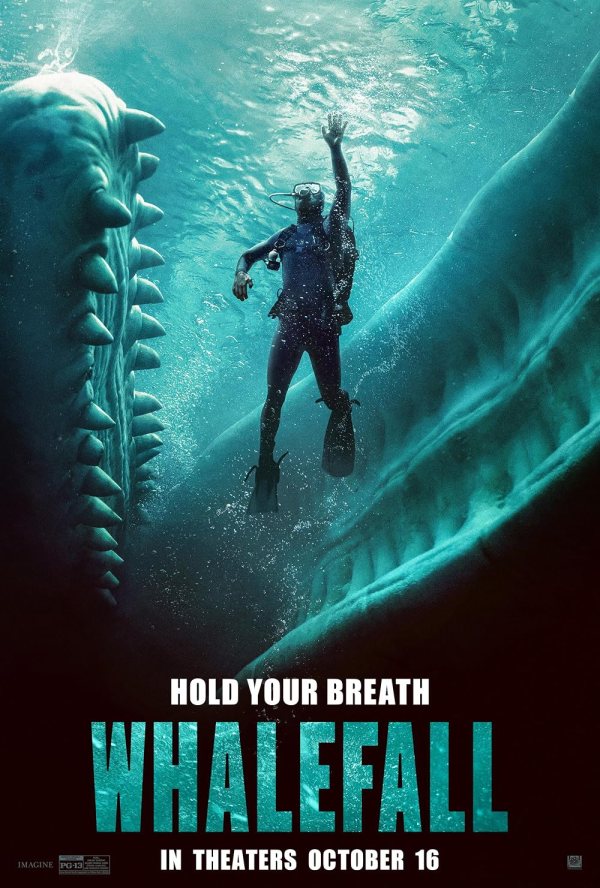
When Jay Gardiner (Austin Abrams) returns home after the death at sea of his father, Mitt (Josh Brolin), he is confronted by memories of a difficult relationship and childhood, with a father who showed a greater love for the ocean and its whales than for his son. But when Jay decides to try to find his father’s body in the ocean depths, he encounters a whale, an encounter that sparks an insane battle for survival and forces him to come to terms with his relationship with his father.

Based on Daniel Kraus’s novel, Whalefall is a wild ride. It’s part adventure, part horror, part melodramatic mush. On leaving the cinema I wasn’t sure whether it was a load of nonsense or an entertaining thrill ride; the reality is it lies somewhere in between. It’s a thrill ride that suffers from over-sentimentality, but if you can get past that, there is craziness to enjoy.

It’s a story told partly in flashback, as we learn about Jay and Mitt’s relationship, but mostly in the innards of a whale. It’s in those underwater and inner-whale scenes that it’s at its best: a mix of tension, Indiana Jones-style puzzles to overcome, and horror-inflected moments.

The film is largely carried by Austin Abrams, much of it spent alone underwater and in the digestive system of a whale. Josh Brolin is at home as the hard father, teaching his son life lessons that will literally save his life. Other performances are little more than cameos, although John Ortiz is, as always, an enjoyable watch. It is also well shot: the underwater scenes are hugely convincing, although the inside of the whale is surprisingly well lit!

It works less well when it’s over-sentimental, which is often. It’s very on the nose: yes, we get it, your father’s influence is a whale you have to escape, alongside the literal one. And the final act tips into overripe melodrama.

Then there’s the ridiculousness of the entire premise, which includes stealing an ending you have seen before!

But if you can get past the silliness of it all, you can have a whale of a time.

The Social Reckoning

Director: Aaron Sorkin

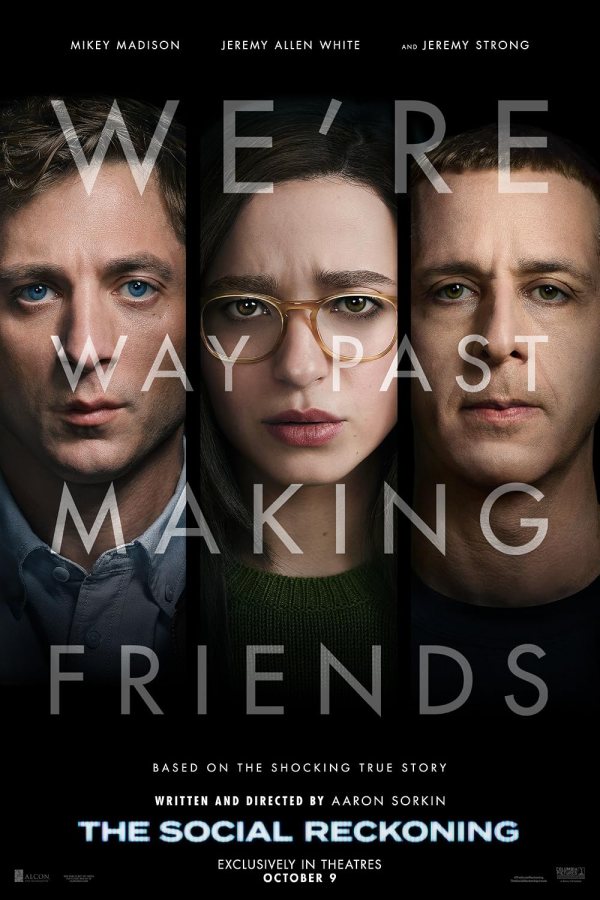
Frances Haugen (Mikey Madison) loves her job and believes in Facebook’s ability to bring people together. But when she sees some disturbing trends, she becomes concerned by the direction of the platform run by Mark Zuckerberg (Jeremy Strong). Jeff Horwitz (Jeremy Allen White) is an investigative reporter looking for an insider to follow up on the political impact he is seeing. This brings him and Haugen together, and the more they dig, the more the story comes together. Haugen grows disillusioned by what she sees and ever more determined to see it stopped, leading her on a route that will take her public and place her and Zuckerberg in front of political committees.

This second trip into the world of Facebook for Aaron Sorkin has had mixed reviews, but I thought it was great. I am its target audience. I like Sorkin’s films, and this, with its investigative style, disturbing core premise and the bravery of its “heroine”, is compelling. It lets Sorkin do what he does well: take a complex story and wordy script and keep it engaging and fast-moving, always carrying the audience along.

It has two excellent central performances. Mikey Madison is great as Frances Haugen, thoroughly believable as the seemingly “mousey”, super-intelligent data scientist who stands up to be counted in a way many wouldn’t. Equally believable is Jeremy Allen White, and there’s great chemistry as they trade barbs and quips, but with respect for the work each is doing. Betty Gilpin is excellent as the WSJ’s San Francisco bureau chief. Jeremy Strong has the least to do as a one-dimensional Zuckerberg, although that is probably the point.

Its message is not subtle, although it avoids being preachy, and its disturbing premise is hard-hitting, from the statistical realities to the spread of misinformation and the abuse of the platform’s loose controls by those in power.

This for me was a story with an important message delivered brilliantly. A like from me!

Verity

Director: Michael Showalter

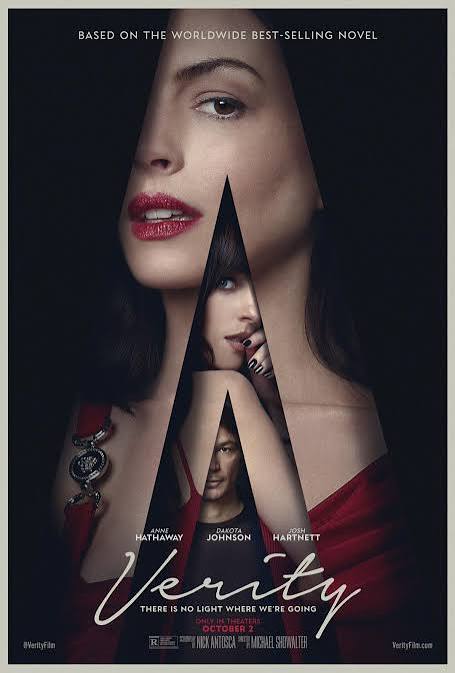
Writer Lowen Ashleigh (Dakota Johnson) is published with limited success. But when Jeremy Crawford (Josh Hartnett), husband of author Verity Crawford (Anne Hathaway), asks her to finish Verity’s successful novel series, famed for its focus on the darkest areas of humanity, her life changes. At the family home she finds an author incapable of finishing her work after a car accident, and a family racked with grief. But as Lowen researches Verity’s work, she realises all is not what it seems, complicated by a growing relationship with Jeremy. Will she discover the truth before it’s too late?

Verity is a dark, semi-erotic thriller, similar to 80s/90s favourites like Basic Instinct and more recent fare like The Housemaid. The problem is that throughout its 117 minutes I was constantly reminded of those much better films. I’ve never read Colleen Hoover’s novel, so don’t know if the source material is at fault, but for me Verity is a poor imitation of the genre: formulaic, derivative, hugely predictable and at times quite dull.

It’s a pity, as it starts promisingly, with a strong opening 15 minutes including a great scene as Lowen looks to cross the road. But the setup tells you all you need to know. You’re pretty sure where it’s going from the start; it’s just which options from the buffet of previous thrillers it picks.

The script is predictable and clunky, which hurts the performances. It helps that Anne Hathaway has little dialogue, as she is the best and most believable thing in the film by a mile. But Hartnett and especially Dakota Johnson are hamstrung by the story and script, Johnson struggling to be believable from the moment she enters the house. And I’m not sure why Irina Dvorovenko is there as Verity’s nurse, given almost nothing to do, except an occasional sinister line.

There may have been potential in the book, but the film didn’t work for me. As Pauline Kael once said “it’s fine if you like that kind of thing.” I didn’t but I’m sure others will.

Digger

Director: Alejandro G. Iñárritu

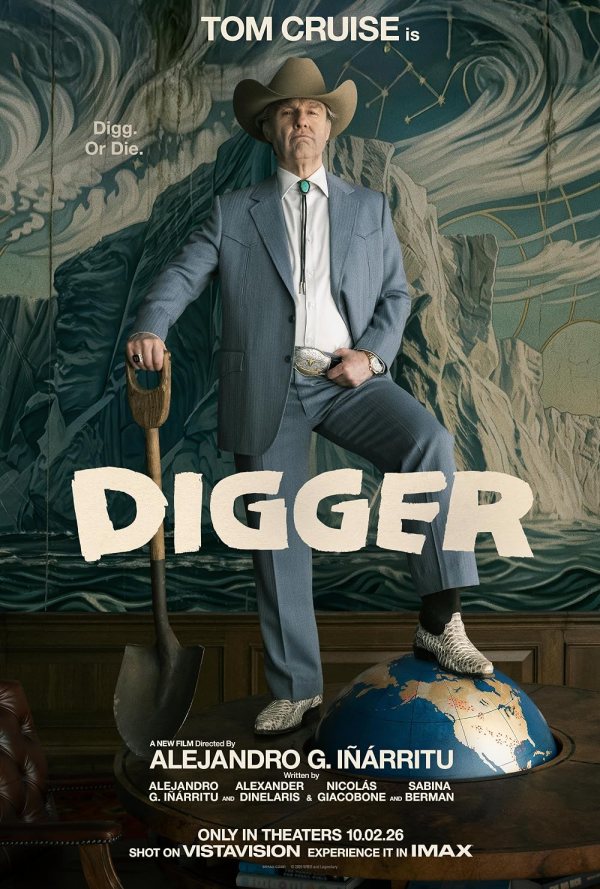
Digger Rockwell (Tom Cruise), an oil tycoon drilling for oil in the Arctic, is warned by chief scientist Dr. Ganesh (Riz Ahmed) that the drilling is likely to cause a global catastrophe. But the warning comes too late, as Digger’s drilling causes a huge iceberg to break free and head towards Europe. Hauled up in front of the President (John Goodman), Digger is challenged to fix the mess he’s made and avoid ecological disaster. All does not go well, and from Digger himself to an ailing President, his US hierarchy and European courts, it leads humanity down a road from which they may never return.

Digger has had mixed reviews, which is no surprise. While there are things to like, I’m sure others will find it grating.

It’s a story with a clear message about our continued abuse of our planet by those in power, as well as our refusal to deal with it. But it also feels a bit of a mess, and never fully grabs you. It feels like a mix of Wes Anderson and Yorgos Lanthimos, but never quite takes the best bits of either.

It’s not a film I disliked — while it has flaws, there are enjoyable parts, especially in its second half: from the moment Digger tackles a European court of literal grey suits, the film finds a clearer narrative and a more believable Digger.

Cruise in the lead role is solid and believable enough, but it’s not prime Cruise, as he doesn’t balance the comedic elements with the depth his character needs, especially as the film reveals its twist. It’s Riz Ahmed who steals the show, alongside John Goodman’s bumbling, blustering President (remind you of anyone?). A Jesse Plemons cameo is always welcome, and Michael Stuhlbarg and Sophie Wilde also add strong support, although Sandra Hüller is poorly used.

The film is well shot and moves between its two worlds smoothly and smartly, although whether both add value is less clear.

It’s a film that has flaws. Its message is important, but it’s not quite as clever, funny or absorbing as it needs to be, though it’s better than its harshest critics may suggest.

Sense and Sensibility

Director: Georgia Oakley

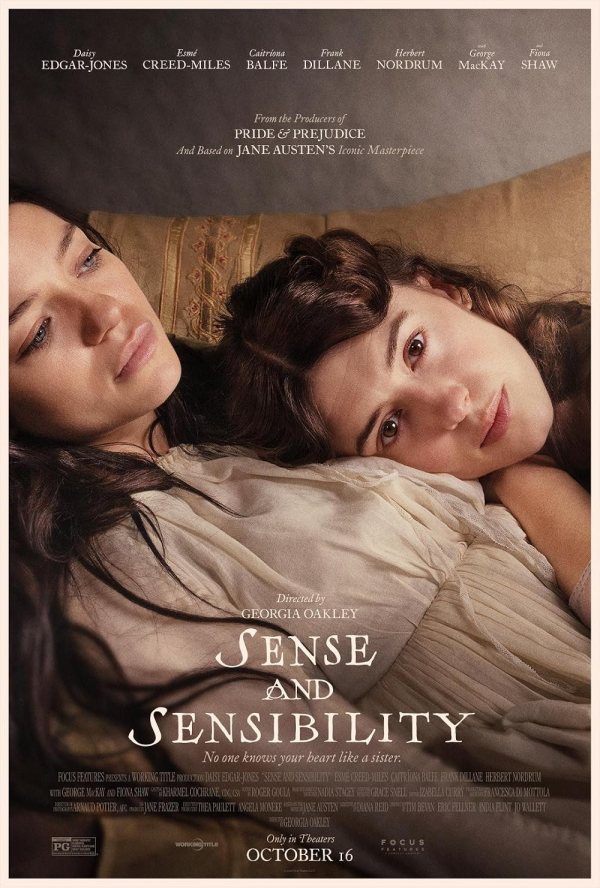
This is the latest screen adaptation of Jane Austen’s novel. Mrs Dashwood (Caitríona Balfe) and her three daughters mourn their father, a loss made worse when his will leaves the family home to half-brother John (Tom Brooke) and wife Fanny (Stacy Martin). Relationships are strained, even if Fanny’s brother Edward (George Mackay) proves a pleasant diversion for eldest daughter Elinor (Daisy Edgar-Jones). Things change when cousin Mrs Jennings (Fiona Shaw) offers a “humble” home in Devonshire. Here Elinor hopes to nurture her friendship with Edward, while impulsive Marianne (Esmé Creed-Miles) draws the attention of charming Mr Willoughby (Frank Dillane) and restrained Colonel Brandon (Herbert Nordrum). Love’s path is far from straightforward, with London trips, passion and heartbreak aplenty, as the Dashwood girls search for happiness.

Sense and Sensibility is a story that feels familiar, with Austen’s text having having countless adaptations and as well as the inspiration for many similar stories. This screen version may not be spectacular, but is a very enjoyable, solid piece of storytelling.

Much of what’s good here comes from the central performances. Daisy Edgar-Jones continues to impress, and it’s her relationship with Esmé Creed-Miles that is the heartbeat of the story, both full of charm and depth. George Mackay delivers the restrained charm of a 19th-century English gentleman, stuck between duty and heart. Frank Dillane brings pantomime villainy, but it’s Fiona Shaw who steals the show as the Dashwoods’ life-loving cousin, full of heart and joy. A couple of strangely wooden performances aside, the ensemble cast is rock solid.

The film looks good, as you’d expect from a period piece, capturing its 19th-century setting perfectly. While perhaps not being a story full of surprises to a modern audience, it’s still an enjoyable, compelling watch, delivered by an engaging cast.

Shaun the Sheep: The Beast of Mossy Bottom

Directors: Steve Cox & Matthew Walker

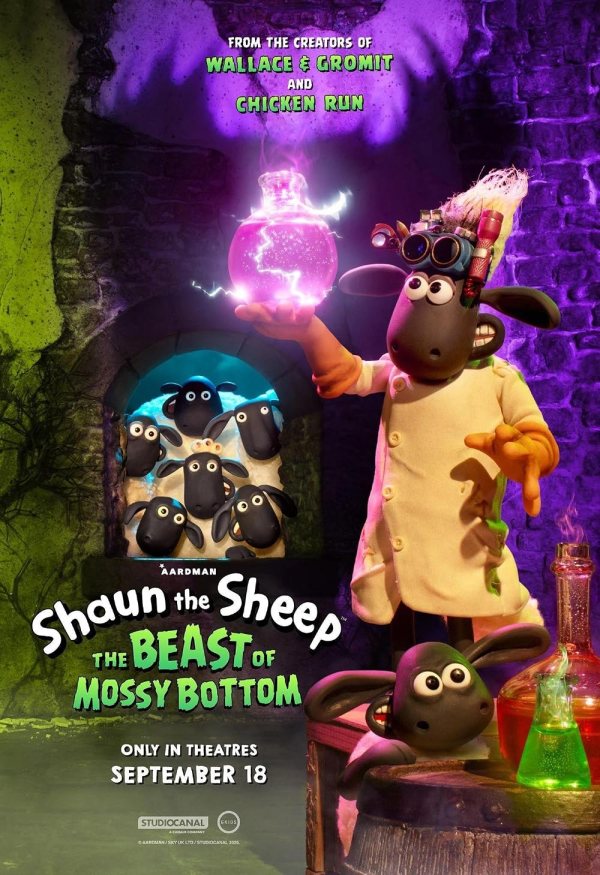
Halloween is approaching and there is excitement on the farm. For the sheep, their secret pumpkin patch has produced a fine harvest, ready for Halloween carving. The farmer is excited to ask the vet to the Halloween Hoedown. But after a pumpkin patch accident, Shaun needs to find a way of regrowing the pumpkins in days, not months. Shaun’s plan doesn’t only help with the pumpkin shortage, it also creates The Beast of Mossy Bottom, leading to a panicked village and an adventure for the sheep and the vet to return the beast back to where he came from.

This is filled with all the ingredients that make Aardman films so enjoyable. A silly story, lots of lovely detail and plenty of cine-literate nods for the older members of the audience.

Shaun the Sheep is aimed at a younger audience than Aardman’s other favourites, Wallace and Gromit, and it plays like that. But that doesn’t mean there isn’t lots for everyone to enjoy. Shaun is silent movie slapstick in animation form: big, colourful and funny for the youngsters, with nods to horror and popular culture for the older members of the audience, everything from Friday the 13th and “Influencers” to The Traitors making subtle appearances.

The action is frantic and never dull. The film is colourful, the story fast moving (its 80-minute runtime whizzes by). It has great moments of slapstick, and as always with Aardman, wonderful background details — check out the name of the Mossy Bottom barber shop for instance. But it’s not all silly, with a sweet story between the farmer and vet at its centre.

While it’s a film that is dialogue-free, it’s not silent, and its voice cast, including Justin Fletcher, John Sparkes, Emma Tate, Andy Nyman and Paul Whitehouse, provides plenty of appropriate noises and expressions that, even without words, give you all the meaning you need.

Shaun the Sheep is 80 minutes of rock-solid entertainment, and while it does play a little young, there is still plenty for everyone to enjoy.

Bad Apples

Director:Jonatan Etzler

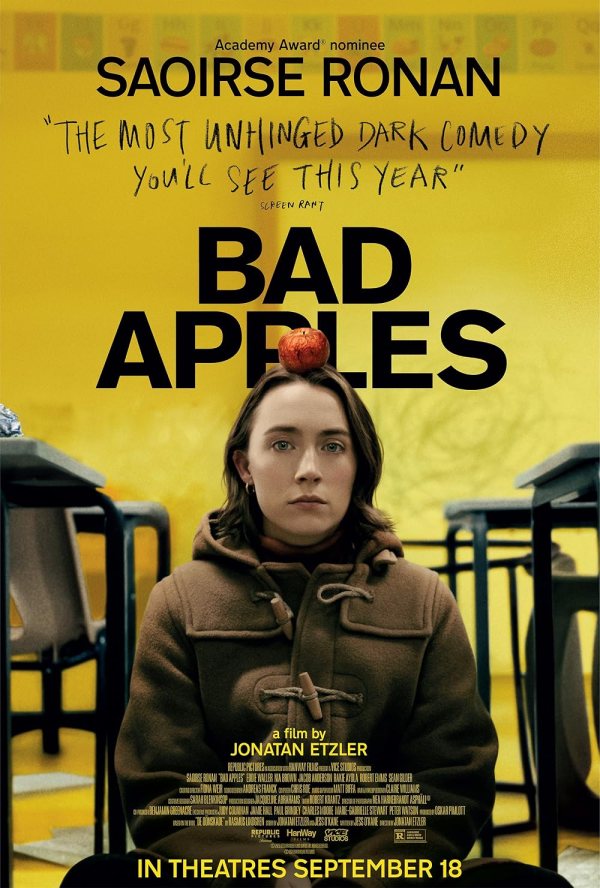
Maria (Saoirse Ronan) is a young teacher who wants to impart her love of education onto her class. Her class wants to learn, but it is made impossible by the disruptive influence of Danny (Eddie Waller), who turns every class into a circus, and puts Maria’s job in jeopardy because of her failure to control him. After a school incident, Maria decides to act, but her actions soon escalate, to the point where Danny ends up locked in her basement. But a school without Danny becomes a joyous place as Maria and her students thrive. But how long can it go on? Has removing the one bad apple made such a huge difference? Or has the damage already been done?

Bad Apples is nuts and it does have its problems, with a ludicrous plot and a final 20 minutes that begins to tie itself in knots. But thanks to the ever-flawless Saoirse Ronan and fabulous newcomer Eddie Waller, it overcomes those flaws to serve up a dark, enjoyably twisted film which is part comedy, part satire, part horror, and, at times, a toe-curlingly tense watch.

It’s a film that borrows across genres, and between its sillier moments it poses questions about education, loneliness, and what people are prepared to do for a good education for their kids at the expense of others.

The film is carried by its lead characters. Saoirse Ronan continually proves that, regardless of the material, she will make it sing. Young newcomer Eddie Waller is brilliantly evil and increasingly vulnerable as the young tearaway. There is also excellent support from another newcomer, Nia Brown, as the increasingly unhinged Pauline. Between them, you’re never sure who the real bad apple, or apples, may be — questions that come to a head in its finale as the whole story takes a wild leap!

As mentioned, it isn’t perfect, as its story stretches credibility and has a last 20 minutes that doesn’t quite hold together.

But that said, its deliciously dark nature and fine central performances give you plenty to enjoy.

Pressure

Director: Anthony Maras

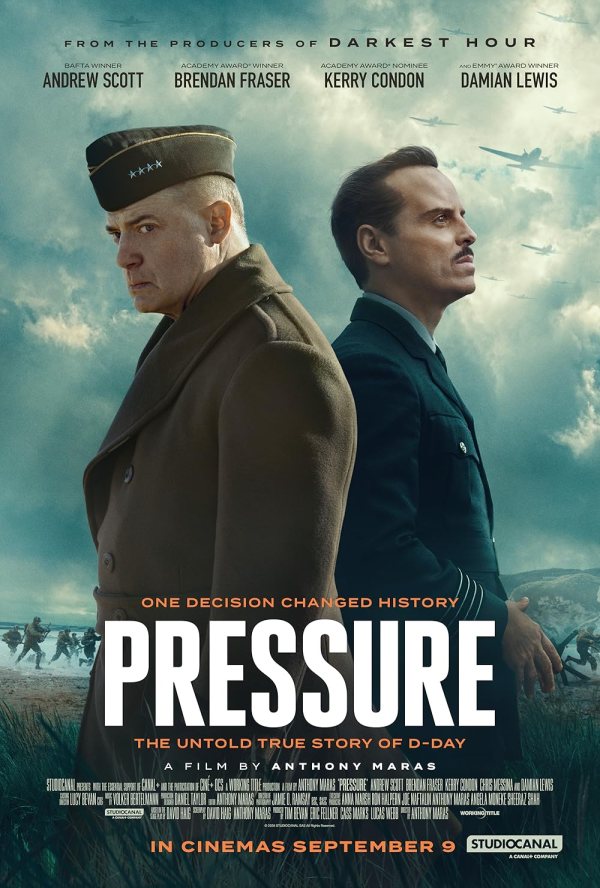
Pressure is a true story, set in 1944, as the Allies under Eisenhower (Brendan Fraser) make final preparations for D-Day. The operation needs an accurate weather forecast, and on Churchill’s recommendation, Eisenhower calls in James Stagg (Andrew Scott) as Chief Meteorological Officer, with 61 hours to produce one. Stagg, a modern meteorologist driven by real-time data, sees storms coming that could mean disaster and huge casualties. This puts him at odds with Eisenhower’s trusted forecaster, Colonel Irving Krick (Chris Messina), convinced historic patterns mean clear skies  and a power struggle to convince Eisenhower and save the invasion.

History is full of little-known stories that offer fascinating insight into the people behind monumental events. Pressure is one such example. While the film itself is a little “paint by numbers” — well structured if not overly inspiring — that doesn’t take away from the fascinating story at its heart.

Maras deserves credit for taking what is fundamentally a story of men arguing about weather forecasts and making it engaging, tense and fascinating across its 100 minutes.

It’s no surprise Andrew Scott and Brendan Fraser deliver two excellent, engaging performances. Scott is perfect as the slightly awkward but convictions-certain Stagg. Fraser captures an Eisenhower caught between the task’s enormity and the risk to lives in his hands. Messina is solid as Krick, and Kerry Condon’s Kay Summersby provides emotional balance amongst the male egos. While much of the film is people arguing over weather, it also provides opening and closing scenes that are hugely impactful.

It falls a little short in places. The telling feels a touch safe, and some plot points land on the nose. There’s also a subplot with Stagg’s pregnant wife, a fictional addition that feels unnecessary, and it occasionally shows its stage-play roots.

Minor qualms aside, this is a solid telling of a fascinating story, and well worth a watch to learn about a little-known but critical moment in history.

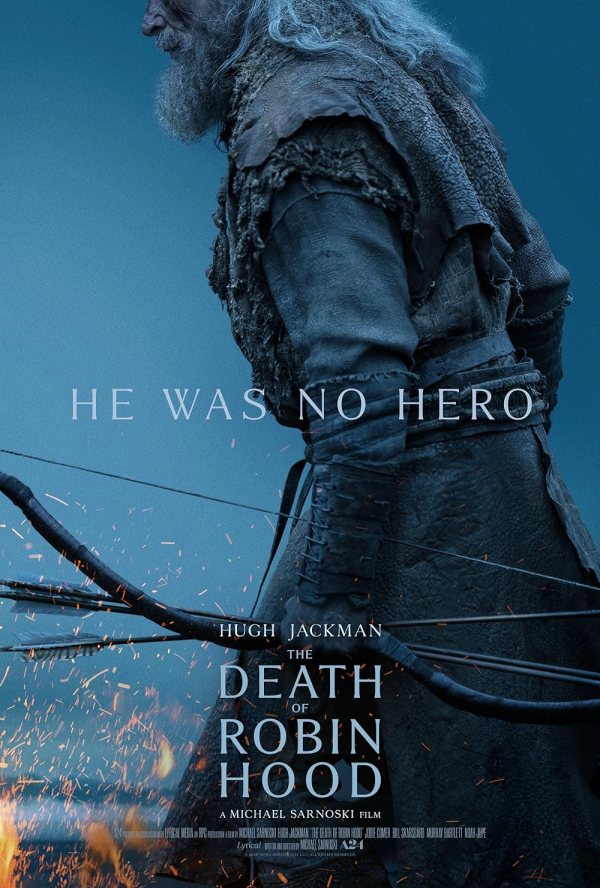
The Death of Robin Hood

Director: Michael Sarnoski

Set in the 13th century, this is no Robin in green tights with merry men. This Hood (Hugh Jackman) is a long way from the myths of the Sheriff, Maid Marion, and stealing from the rich to give to the poor. Rather, he’s a grizzled, violent outlaw, tired of life and a continual target of revenge-seekers. When old friend Little John (Bill Skarsgård) finds him and needs help, it takes Robin on a journey that leads to violence and death. When this almost becomes his final battle, he ends up in a priory under the care of Sister Brigid (Jodie Comer), where he begins to face up to his past — redemption, or will it catch up with him?

One of my favourite quotes about The Shawshank Redemption is that there’s a lot of Shawshank before you get any redemption. The Death of Robin Hood goes further: this is all Shawshank.

This is a grim, gritty tale, and at times hard work to watch. It presents the familiar legend as a vicious outlaw, and the first half makes that reality clear. The second half changes tack, as we meet Comer’s Brigid and the island priory commune, challenging Hood with his past. In Brigid he meets compassion, no questions asked, driven by her own tragic history. He’s also challenged by a wise leper (Murray Bartlett), as well as a new visitor to the island.

The biggest challenge for me is that so much of it feels a slog — dark and visceral in its opening, but slow and ponderous towards its conclusion. Is it worth it? If the aim is redemption for Hood, that’s questionable. If it’s whether his actions help others find their own way through, then maybe.

Even at its hardest, there’s things to enjoy — Jackman and Comer are good value as ever, Bartlett and Skarsgård strong in support, and Faith Delaney impressive as Little John’s daughter.

It’s well shot, with impressive landscapes doing a lot of the storytelling. For all its slog, it’s strangely compelling, leaving me wanting to see where it headed rather than wanting it to end.

It’s not light-hearted popcorn fare, but there’s something there if you’re prepared to look for it.

The Dog Stars

Director: Ridley Scott

Based on Peter Heller’s novel, it is set in a near future, where much of humanity has been wiped out by a virus. But there are pockets of survivors. Hig (Jacob Elordi) and Bangley (Josh Brolin) live in an isolated valley near Denver, peaceful but for the threat of occasional scavengers. Hig, a pilot, flies into the abandoned city for supplies. On these journeys he occasionally picks up broadcasts from “Grand Junction,” a possible sign of normal life elsewhere. Deciding to follow the signal, he’s led to a rancher (Guy Pearce) and his daughter (Margaret Qualley); when the three are forced together, they head off to find it. A new utopia? Or something else altogether?

Ridley Scott can make a film, and that shows here: sweeping vistas, tension, action and solid performances. The problem is it’s all rather pedestrian and a little predictable — bar one enjoyably bonkers plot turn. It also struggles to find balance between thriller and romance.

The story, while set in a dystopian future, with its fair share of threat and risk, is much more a story of today’s humanity. Exploring our mistrust of “others,” our willingness to isolate and self-centre, our cultish devotion to those promising a future that never really exists. That is balanced with the hope that humanity is better when it comes together. While those elements are intriguing, the film feels like it never really takes the characters anywhere, all feeling a little underwhelming.

The performances are what you’d expect from such a strong cast, Brolin and Pearce deliver plenty of grizzled and weary, while Margaret Qualley and Elordi counterbalance with optimism and hope. Allison Janney turns in a wonderfully deranged cameo, though Benedict Wong is woefully underused.

While it has its moments of action and tension, it’s let down by pedestrian storytelling that never quite draws you in. Not a film to dislike, but one that never fully engages.

Blog at WordPress.com.

Up ↑

Create your own website, free on WordPress.com.Create your own website.
Start free